13+
Years Of Experience
Pre-Season Diagnostics That Prevent Mid-Summer Failures
HVAC Tune-ups in El Paso and surrounding areas for systems operating before peak cooling and heating demand
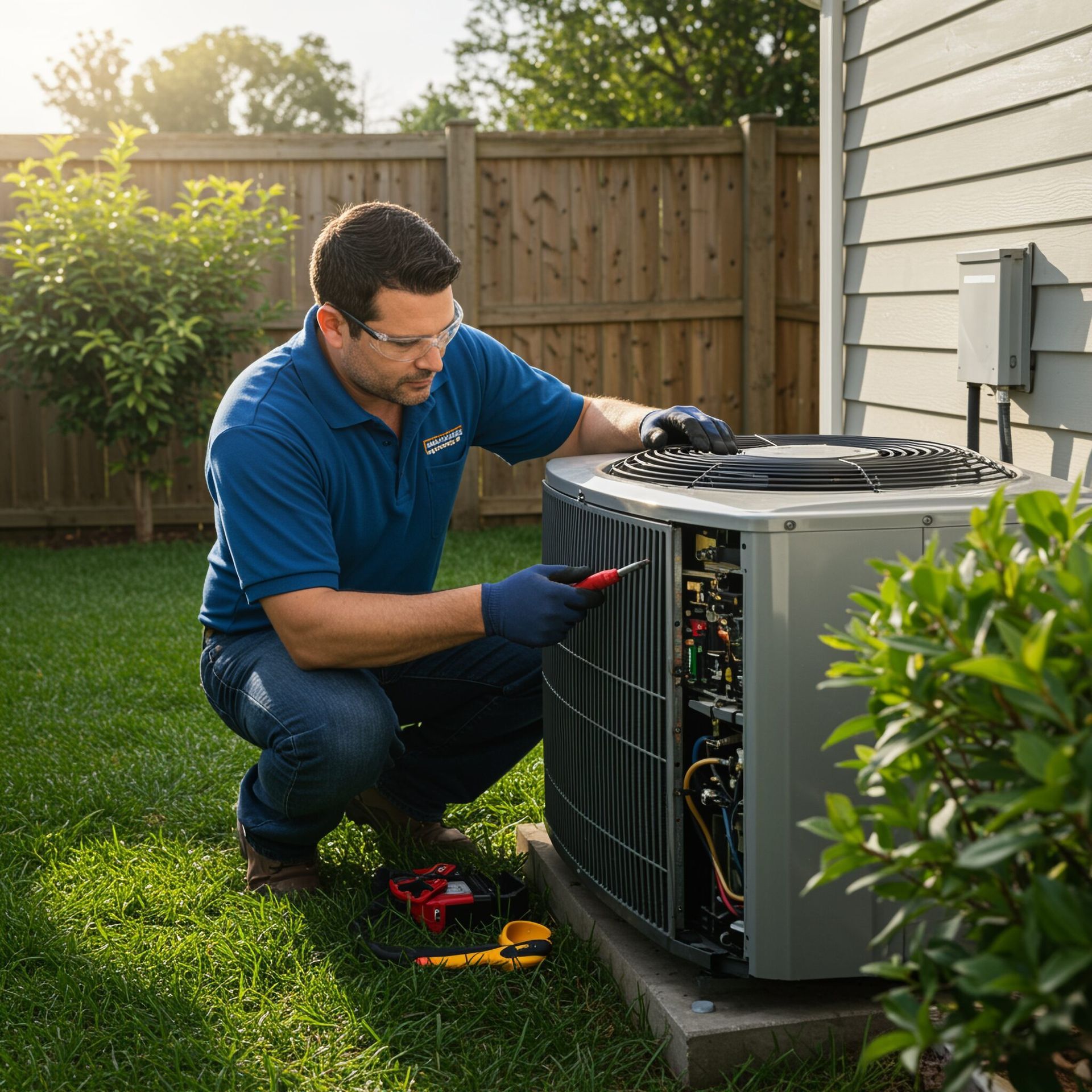
West Texas seasonal transitions between mild spring weather and sustained summer heat create a brief window when HVAC tune-ups identify component wear before you depend on the system for daily comfort. Aire Systems LLC provides tune-ups that include filter changes, refrigerant level verification, thermostat calibration, electrical connection tightening, and airflow measurement with static pressure checks to confirm your ductwork delivers adequate CFM volume to every room. Technicians identify worn capacitors, pitted contactors, and low refrigerant charge during the diagnostic process and stock common replacement parts on the truck for immediate correction, which prevents the emergency repair calls that occur when these components fail during the first 100-degree afternoon in June.
Tune-ups address the mechanical drift that occurs over months of operation: thermostat calibration shifts and causes temperature swings, electrical terminals loosen and create resistance that heats connections and degrades components, and refrigerant slowly escapes through microscopic leaks until cooling capacity drops below the level needed to maintain set point during peak afternoon load. NATE-certified technicians measure these variables and correct them before they progress to failure, which extends the interval between major repairs and maintains the efficiency ratings your system achieved when new.
Request a pre-season tune-up appointment to verify your system is ready for sustained summer operation.
What You Notice Once Seasonal Maintenance Completes
Tune-ups begin with airflow and static pressure verification to confirm your duct system is not restricting return air or supply air to the point where the blower motor works harder than designed and indoor temperature distribution becomes uneven. Filter replacement eliminates the most common cause of restricted airflow, and refrigerant level checks confirm that charge remains within the manufacturer's specified range for your equipment model and ambient temperature conditions. Electrical connection inspection tightens terminals on contactors, capacitors, and circuit boards where vibration and thermal cycling cause loosening over time, which prevents the arcing and heat buildup that lead to component failure.
After the tune-up, your system reaches the thermostat set point in the same number of minutes it required when new, and indoor temperature remains stable without the degree or two of overshoot and undershoot that develops as calibration drifts. You no longer hear the extended blower runtime or compressor short-cycling that indicates restricted airflow or incorrect refrigerant charge, and monthly utility costs remain consistent instead of creeping upward as efficiency degrades.
Tune-ups do not replace worn compressors, heat exchangers, or blower motors, but they maximize the lifespan of these major components by eliminating the operating conditions that cause premature failure. When technicians identify parts approaching end of service life, you receive replacement recommendations with time to schedule the work before failure occurs.
Common Questions About This Service
Homeowners across east and west El Paso and the Allen area ask about tune-up timing and what the service actually accomplishes before scheduling appointments.
What does refrigerant level verification involve during a tune-up?
Refrigerant level verification measures suction and discharge pressures under operating conditions and compares them to manufacturer specifications for your equipment model and outdoor temperature, which identifies slow leaks or incorrect charge that reduce cooling capacity and force longer runtime to reach set point.
How does thermostat calibration affect system performance?
Thermostat calibration ensures the device accurately measures indoor temperature and cycles the system on and off at the correct set point, which prevents the temperature swings and wasted runtime that occur when calibration drifts by two or three degrees over multiple seasons of use.
When is the best time to schedule a cooling system tune-up in El Paso?
Schedule cooling system tune-ups in March or early April before outdoor temperatures consistently exceed 90 degrees, which allows time to address identified issues before you depend on the system for daily comfort and before service providers fill their schedules with emergency repair calls.
Why do electrical connections need inspection and tightening?
Electrical connections loosen over time due to thermal expansion and contraction during system cycling, which increases resistance at the connection point and generates heat that degrades contactors, capacitors, and wire insulation until the connection fails or arcs during operation.
How quickly can worn parts be replaced if found during the tune-up?
Most worn parts identified during tune-ups—capacitors, contactors, filters, and thermostats—are replaced immediately using inventory stocked on the truck, which eliminates the need for ordering components and scheduling a return visit to complete the work.
Aire Systems LLC performs manufacturer-specific diagnostics on every tune-up and provides written documentation of measured values and component condition. Schedule your seasonal inspection at our Brenard Drive location in El Paso or through our Allen office to prepare your system for peak-load months.