
13+
Years Of Experience
Heating Systems Sized for Actual Heat Loss
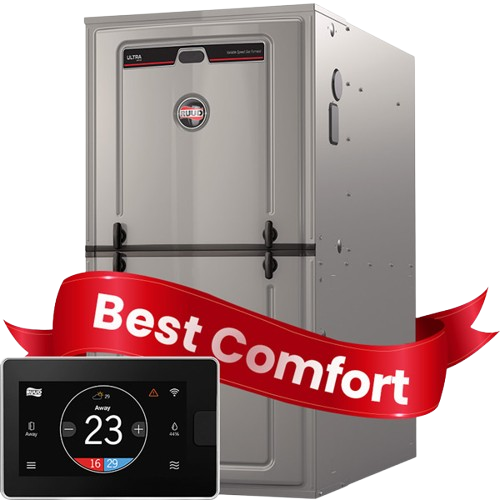
Furnace Installation in Allen and surrounding areas for homes where uneven heating leaves some rooms cold while others overheat
Short cycling happens when furnaces shut down minutes after ignition because the thermostat location reaches setpoint before heat distributes through the entire duct system. Aire Systems LLC performs Manual J load calculations before specifying furnace capacity, measuring envelope leakage, insulation performance, and window heat loss to match Btu-per-hour output to your structure's requirements. High-efficiency models with variable-speed blowers extend run cycles and distribute heat more evenly than single-stage units that operate at full capacity regardless of actual demand.
Furnace installation involves venting verification, combustion air supply, gas line sizing, condensate drainage for high-efficiency models, thermostat integration, and post-installation static pressure testing to confirm airflow meets manufacturer specifications. AFUE ratings describe the percentage of fuel converted to heat, but installed efficiency depends on duct sealing, return air balance, and proper combustion setup. Units rated at ninety-five percent AFUE deliver that performance only when venting, airflow, and gas pressure are within design parameters.
Request an installation estimate that includes load calculations and static pressure testing for your ductwork.
How Installation Quality Affects Actual System Efficiency
Static pressure testing measures resistance within the duct system using manometers placed at the supply and return plenums. Excessive resistance forces the blower to work harder, reduces airflow below rated CFM, and prevents the heat exchanger from operating at its design temperature. Duct sealing lowers static pressure by eliminating leaks that pull unconditioned air into return ducts or dump heated air into attics and crawlspaces. Variable-speed blowers adjust airflow in response to static pressure and thermostat demand, reducing energy waste during mild weather when full capacity is unnecessary.
Once installation is complete, rooms that previously remained cold reach the same temperature as areas near the thermostat because the blower delivers consistent airflow through sealed ducts and the furnace completes longer cycles that allow heat to reach distant registers. Combustion efficiency remains within one percent of the AFUE rating because venting creates proper draft and the burner receives correct gas pressure. The system operates quietly without the rumbling ignition and abrupt shutdown that indicates oversized capacity.
Thermostat integration allows two-stage and modulating furnaces to communicate heating demand and adjust burner output accordingly, which prevents the temperature overshoot common with single-stage equipment. Safety checks include verifying flame sensor operation, limit switch function, and carbon monoxide levels in flue gas to confirm complete combustion. Installation quality determines whether rated efficiency translates into lower utility costs or remains theoretical.
Answers to Frequent Installation Questions
Furnace selection depends on heat loss calculations, fuel type, available space for venting, and whether your home benefits from variable-speed airflow. Homeowners in Allen typically see installation completed within one day when ductwork requires only sealing rather than modification.
What does AFUE measure in practical terms?
Annual Fuel Utilization Efficiency describes the percentage of gas converted to heat over a full heating season, so a ninety-five percent AFUE furnace wastes five percent of fuel through venting, though actual performance depends on duct sealing and airflow balance.
How does load calculation prevent oversizing?
Manual J calculates heat loss through walls, windows, ceilings, and infiltration to determine required Btu-per-hour output, which prevents installing excess capacity that causes short cycling and incomplete combustion.
Why does static pressure matter after installation?
Excessive static pressure reduces airflow below manufacturer specifications, forcing the heat exchanger to operate at higher temperatures and shortening its service life while reducing delivered heating capacity.
When does ductwork need modification during furnace upgrades?
Ducts require resizing when static pressure testing shows restriction above recommended levels, when return air capacity cannot support higher blower speeds, or when trunk lines cannot deliver rated CFM to distant zones.
What safety checks are performed after installation?
Technicians verify flame sensor operation, test limit switch response, measure carbon monoxide levels in flue gas, confirm proper venting draft, and document gas pressure at the manifold to ensure complete combustion.
Aire Systems LLC includes load calculations and post-installation airflow testing with every furnace installation to confirm equipment operates within design parameters. Arrange an evaluation to compare AFUE ratings and review venting requirements for your home.